Showing posts with label herbs. Show all posts

Saturday, December 30, 2017

Garden Records and a Free Printable for You!

Every since we moved to this location, I have kept a hap-hazard garden diary.   It's in a spiral notebook and contains vegetable varieties, ornamentals planted, rainfall, bloom dates, etc.   
's
There’s a lot of info in there but I’m not sure how much constructive use it has.   This fall I read The Naturalist’s Notebook by Nathaniel Wheelwright and Bernd Heinrich.    It contains lots of information on how develop your inner-scientist.   

And it is beautifully illustrationed by one of the authors, Bernd Heinrich. 


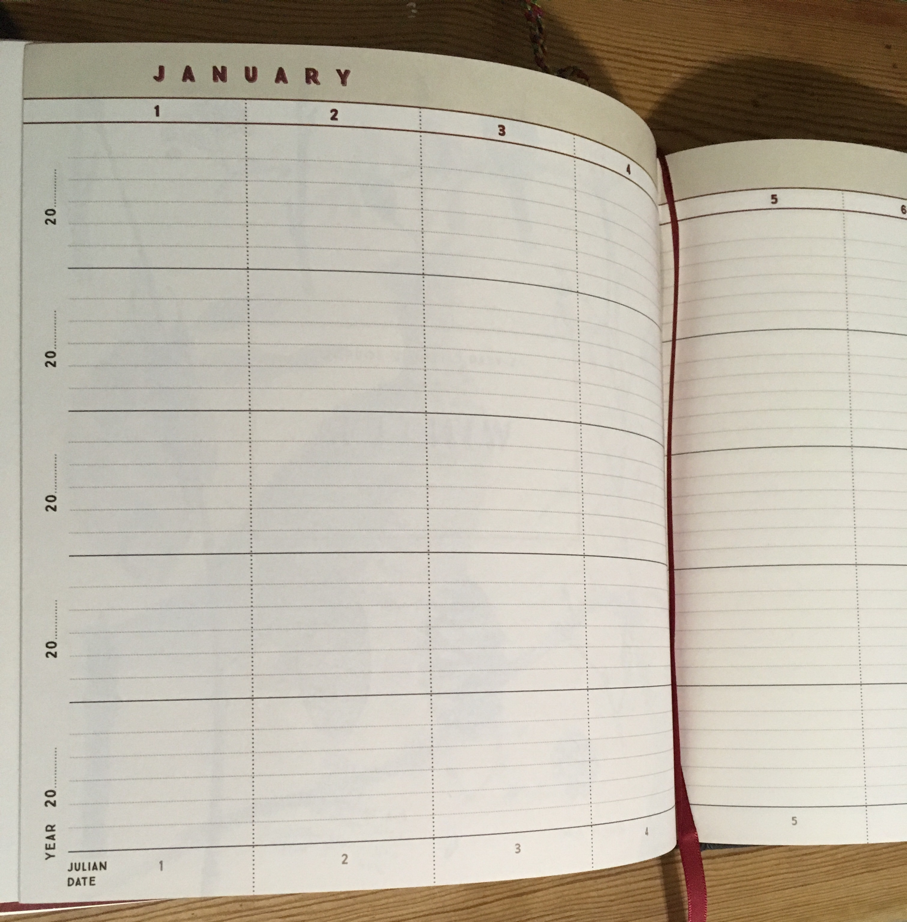
The book includes a five year calendar to record observations - a format that could be handy in recording garden info.    In this time of unusual weather occurances and climate change, a multi-year record may help us see if our climate is really changing - and if it is, how quickly.    I expect that I will include info specific to our veggie/herb growing along with weather items like rainfall, frost, high temps, etc.    And I expect that I'll include some observations of birds and butterfly activity in our yard.   That's the initial plan anyhow.   We'll see what 2022 has me recording.     


I'm so excited about this format that I've put together a free printable 5 Year Garden Calendar for you to use!    It was formatted to be printed front-and-back.   P
rint it on heavier copy paper so that the type doesn't show through.  I took mine to a printer to be spiral bound - but you can just punch holes and put it into a notebook.   I hope you give this a try - it should help make us better gardeners, better naturalists, and better citizen scientists! 

Saturday, December 9, 2017

Soup Weather

What is it about soup or a warm drink that is so comforting during cold weather?   I love how they warm me up from the inside out.   And after the weather we've this week, we're all about warming up.   It's been cold and wet and even SNOWED here in deep south Texas! 

Today we decided  we needed some Sweet Potato Corn Chowder.   Luckily, I made a fresh batch of bone broth a few days ago.  It adds tons of flavor to soups, stews or anything cooked in a liquid.    Just look at the deep color!     Here's how I make my bone broth . . . . 

 
This soup starts by sauteeing six slices of bacon until it's crisp.   Remove the bacon, crumble it up, and save it for later.    In the bacon grease, saute chopped onion, celery, and green bell pepper.   I usually add in red bell pepper or anything I have on hand that strikes my fancy.   

At this point, you will add a cubed sweet potato, salt, tyme, a bay leaf, and two cups of water or, even better, a rich broth.    I'll take this opportunity to encourage you to grow a few herbs.   Grow them in pots or in a garden, on a windsill or an apartment balcony; it doesn't matter where.   Herbs are easy to grow, take very little space, AND make everything taste better!  Today I used dry thyme but went to the patio for the bay leaf and parsley.    Now, let everything simmer for about 20 minutes or until the sweet potato is soft.   It'll look about like this and will fill your home with an amazing aroma!
Time to thicken things up a bit.   Mix 3 tablespoons of flour and 1/2 cup of cold milk together.    I put mine in a small jar and shake it, shake it, shake it!    Once the sweet potato is soft, add the flour & milk mixture to the pot.    Stir well and let it simmer for 10 minutes.    You will have a fairly thick mixture but the flour needs this time in the heat to do its thing.   

To finish it of, add 2 cups of frozen corn.   Feel free to use fresh corn, but then you'll need to cook it a bit longers.   Also add 1-1/2 cup of warm milk, 3 tablespoons (or more) of fresh chopped parsley, and a squeeze of honey.    Heat until everythings warm.   The frozen corn will cool things off a bit so expect this step to take 5 or 10 minutes.    

Now it's ready!   
Ladle into bowls, garnish with the cooked bacon and enjoy!  

If you want a printable copy of the recipe, click here!     

Friday, January 6, 2017

January in the Garden

January a wonderful month in deep south Texas to spend time in your garden!  But when we get 80 degree days like earlier this week, we're tempted to jump the gun on some garden tasks.  Here's a guide for January Garden Tasks in our area.  


  • Gather and shred your fallen leaves.  They can easily be shredded with a mower or an inexpensive leaf shredder.   I have an electric leaf shredder, like the one pictured, that is indispensable this time of year.   The shredded leaves can then either be composted or used as mulch, where they will help suppress weed seed from sprouting and cool the soil during the summer. I have heard people say not to use live oak leaves because they contain too much tannin and tannin keeps the leaf from breaking down.   If you shred your leaves, they will decompose just fine.   Much to my husbands dismay, I am a proud leaf rustler.  I try to keep the back of my car empty so that I can pick up any bagged leaves that have been left at the curb.   You just can't have too many shredded leaves.
  • Water only as needed.   Much of the landscape will be dormant and will not be using much water.   But dry cold fronts, high winds, and low humidity can dry your plants quickly so check them regularly.   Water an established lawn only every 10 days or two weeks.    
  • Be prepared to protect your tender vegetation from any freezing temperatures that we may get. Go here to read more about this. 

PLANT: 
  • Trees and Shrubs:   All trees, including fruit, with the exception of citrus.   This is also a good time to plant non-tropical shrubs.  
  • Vegetables:  broccoli, cabbage, carrots, cauliflower, Swiss chard, collards, kale, leaf lettuce, leeks, onion (plants, not seeds), parsley, potato, radish, spinach, and turnips.  
  • Herbs:  basil, dill, fennel, mint (in a pot to contain the roots), rosemary, rue, thyme.   A frost will harm  your basil so it is best in a pot which can be brought in during inclement weather.  
  • Flowers from Seed or Bulbs:  alyssum, amaryllis bulbs, calendulas, calla lillies, petunia, larkspur, poppy, stock, calendulas.     Some say you can still plant bluebonnets and nasturtium seed but, in my experience, those are best planted in October.
  • Flowers from Transplants:   pansies, petunias, alyssum, dianthus, snapdragons, and violets
  • Rose bushes
Vegetable Planting Date Sources:  Texas Extension Service and the Old Farmers Almanac 

FERTILIZE:   Citrus trees that are at least 3 years old, your annuals and vegetables.  Do not fertilize tropicals right now; let them rest. 

PRUNE: 
  • Landscape trees.  Most established landscape trees will require a certified arborist to properly and safely prune. 
  • Peaches, figs, and other fruit trees.  I prune to remove dead wood, to shape the tree. and to keep it a size where I can reach the fruit.   We are going to plant a mango and an avocado tree and I am going to try to prune them shorter so their fruit is accessible.   I never wanted to grow them before because they get so tall, I felt like I'd be growing the fruit for the possoms, racoons, and other vermin.   
  • Do not prune your shrubs yet.   Some of our worst cold snaps (and ice storms) have arrived in February.     

Gardening adds years to your life and life to your years.         


Sunday, November 20, 2016

It's Bone Broth Season!

Nothing has improved my cooking more than using homemade bonebroth in my recipes.   I started making this a couple of winters ago because it was supposed to be good for me . . .  and because it was so warm and yummy to sip a cup of it on a cold winter evening!   I was a little slow to click in to what that rich flavor could add to my recipes.    I like to make mine in a crockpot and cook it for 24 hours or more.   The actual recipe varies from time to time, depending on what I happen to have in the refrigerator.   Here is my basic recipe:

Start with the bones from a roasted chicken - or if it's Thanksgiving week, the bones from your Thanksgiving turkey.   I try to buy chickens that are labeled hormone and antibiotic-free but I am not above buying a grilled or roasted chicken at the grocery store and then using those bones.   Add celery stalks (or the ends of celery stalks and use the celery in your dishes), 1/2 to 1 onion (quartered), two or three carrots, a bunch of parsley, and a couple of bay leaves.   Toss in some whole peppercorns and cover with water.   I use filtered water.   Now turn your crockpot on and set the timer for 24 hours.   I've read it takes this long for the marrow from the bones to leach into your broth.

The first winter that I made bonebroth, I did it on the stovetop.  I had to constantly add water to the pot and was afraid to keep the burner on over night.   I cook with gas and running the burners for 24 hours to make broth ran through LOTS of propane - and turned out to be very expensive broth!   That's when I switched to the crockpot and I love this process.   It cooks slowly enough (even on the high setting) that I don't have to add extra water.  This gives me a nice, richly colored broth.

This is what the chicken and veggies look like after a day of simmering.    Remove them from the crockpot with a big straining spoon.    You won't be able to get ALL of the solids - at least I am not patient enough to get all of the solids out during this step.   At this point, I may add some more spices.   It really depends on what my plan for the broth is.  If I'm cooking with it, I don't bother with more spices.  But if the broth is for sipping, it probably needs some salt and pepper - and a little tumeric or cumin can be tasty too. 
Let the broth cool for 30 minutes or so and then it's time to strain it.   My system is above.    Look at that color!   I made this with a couple of turkey necks and a part of a chicken carcass.    I only had part of a chicken carcass because still haven't trained all my family (i.e. my husband) not to through away chicken bones that are in the refrigerator . . . . 

I know you saw the broth in the last picture, but it was so pretty I thought I'd show you another picture of it!
The final step is to put it into jars.   It usually makes about four quarts.   I just drink what doesn't fit into the jars.   It will stay fresh in the refrigerator for 1 week or in the freezer for 3-6 months.    You can freeze it flat in plastic ziplock bags or in a jar.   For the freezing, I like the bags but for the defrosting and using, I like the jars.    If you freeze in a jar, freeze it first without the lid, leaving room for expansion.   After being frozen for a day, you can cap the jars.   Otherwise, you are risking some broken jars.

Here's a printable version of my recipe.

If you haven't tried bone broth, I hope  you will.   It's super easy, super tasty, and super good for you!

Friday, December 27, 2013

Attracting Wildlife to Your Garden

This morning we visited my sister-in-law at her new home and soon-to-open B&B.   The M-T Nest is going to be geared to birders and naturalists.   In under an hour, we saw cardinals, green jays, banded kiskadees, a Harris hawk and, of course, Texas' state bird, mockingbirds.   She told tales of the hunting habits of their resident barn owls.    And that was just on our drive up the drive and from inside the house.   It kinda reminded me of Chevy Chase's movie, Animal Farm.  Remember it?   They're trying to sell their New England country home and have enlisted all the townsfolk to help   When the prospective buyers approach the house, someone releases deer to scamper across the law - what a pastoral scene - well, unless you have first-hand experience with deer in your yard

Anyhow, it got me thinking about what our landscapes need to include if we want to attract wildlife to our little piece of paradise.   Some good general guidelines are the requirements to certify a yard as a Certified Backyard Wildlife Habitat.   It's a Texas Parks and Wildlife program.   You can find the application here 
   
Basically, you need food sources, water sources, cover from preditors, and nesting sites.  I had assumed that I'd have to have an almost completely native landscape but the certification only requires that at 50% of the planting a be native.    

Sometimes you will want to get more specific.   We've planted a pecan tree to appeal to the local parrots and leave our sabal and Washingtonia palms untrimmed so the orioles a nice nesting place.  We've left a gnarly old Ashe tree with lots of trunk rot for the Eastern screech owls   We plant fennel, dill, and parsley for the caterpillars to munch on.   And we have lots of red blooming plants to appeal to the hummingbirds.     Frogs find refuge in overturned clay pots and we definitely want some frogs around.  They are voracious mosquito eaters.   

In this new year, I challenge you to plant with a purpose.  Do a little research before you go to your local garden center.   Choose items both for their beauty and for what they will draw into your garden.  Happy gardening! 


Friday, July 20, 2012

Garden Crossroads

I find myself at a gardening crossroads concerning our vegetable garden.    Twelve years ago, we chose this sunny spot for herbs and vegetables.   Hubby brought in some nice light soil.     A few years later we lined it with some old, old, OLD  railroad ties and then subdivided the beds with some large salvaged square posts.    Those bed dividers also serve as paths and work spaces.   We can reach any part of the planting beds from one of these paths.   This all worked fairly well until the wood began to rot.   Now there are spots where I really don't want my grandchildren - or my mother - strolling.

This is what the garden looked like at the beginning of this spring growing season. 
You can see that land just outside one edge slopes down to the pastures.   The two closest beds contain herbs and the farthest bed houses the asparagus.  I think we planted the asparagus in 04 or 05 and are now getting a pretty steady supply of spears.   The compost bins are housed in another bed behind a small trellis.   There is a keyhole garden directly behind the bench.

  As much as I love growing herbs and vegetables, I have found that I work really hard getting things planted and then forget (i.e. ignore) this edible garden.   Which leads me to my big dilema - what direction do I want to take here?  
  • This fall, we will be installing live oak trees along the pasture fenceline -  should we extend the shade tree planting and make this a nice shady space?
  • Simple rectangular raised beds?  
  • Something a little more naturalistic.  I was reading another gardening blog, Hoe & Shovel, and her edible garden is as beautiful as the rest of the landscape.   We have been ammending this soil for the past twelve years - I hate to waste all that effort on sod . . .
Thankfully, it's just to darn hot right now to take on any big projects - so, I'll just mull this over a bit longer.  Guess I need to begin a pros and cons list of the options. . . .


Monday, June 18, 2012

June in the Garden


It is so hot outside, it's hard to think about many garden projects.  But I've been ignoring my planting beds and I can already see that I'm really going to pay for the neglect.   My plants may be melting in our heat but the weeds are thriving! 
To help your lawn withstand our summer heat, do not mow it too short: 2” for Bermuda grass and 4” for San Augustine varieties.  Never cut more than one-third of the blade.   Do not bag your grass clippings.  Clippings should be left on the lawn to work their way back into the soil.  They contain nutrients that will produce a beautiful, green lawn.   A lawn needs about one inch of water each week.  It is best for your grass to receive the inch in just one or two waterings.  If you see some brown patched in your lawn, give the grass a good tug.  If it pulls up you may have grubs eating the grass roots.   Me, I like to squish them, but your nursery professional can guide you in their treatment.   
Frangipani - loves the heat and is propogated from stem cuttings

Afternoon shade may help tomato plants continue to produce.  Varieties with large fruits tend to split in high temperatures.   Squash and beans are probably done producing.  Remove your spent vegetable crops.   Most can be added to your compost pile or bin.  Avoid putting in anything that is diseased.  If you have beds that are empty, you can spread heavy plastic sheets.  The heat generated will kill weed seeds and make gardening next fall much more enjoyable.  For the best results, be sure to leave the sheeting on for 4 to 6 weeks.  If you don’t have weed issues, add one or two inches of organic material to your planting beds. 
Bougainvillea - another heat lover
I'm seeing aphids on our crotons and jatropha.   Coleus, copper plants, and firebush also ten to be susceptible to whitefly and aphid invasions. Regularly check for whitefly and aphids.  My first treatment for aphis is to simply spray the plant and physically remove the aphids.  Spray daily for about a week and they may just give up.   Next step is to spray with soapy water (or insecticidal soap).  The soap will suffocate the insect.  Make sure to spray under the leaves, where bugs love to hide. 

To encourage compact bushes with many blooms, pinch your poinsettias and chrysanthemums every four leaves. 
Even though it is hot, you can take cuttings from spring blooming shrubs right now.  Last week I took lots of cuttings from my father's gardenia.  Cut past the green wood, just below a node.  Remove all but the last set of leaves.  I'm trying to root some of them in water and some in potting mix.  I've got mine inside where they get some indirect light.   Hopefully, I'll have little gardenia shrubs to share in a few months. 


IF YOU ARE A DIE-HARD AND MUST PLANT RIGHT NOW, PLANT:

Flowers:  ruellia, gerbera daisy, dusty miller, gazania, vinca, night and day purslane, iceplant, snapdragon, zinnia, moss rose, coleus, celosia.

Bulbs:  caladium (in the shade)

Vegetables:   Peppers (from bedding plants - it's probably too hot for many seeds to sprout)

Herbs:       mint, rosemary, rue, oregano, hierba buena.   Mints are aggressive growers. If you want to keep it contained, considered planting it in a pot. 

Trees:  This is the area to have a little patience.  Unless you don't have a choice, wait until October to plant trees.

Palms:  Palms love, love, LOVE this heat!   You can plant any of them right now.  Ones that do great in deep south Texas are: Texas sabal palm, Chinese fan palm, Mediterranean fan palm, Washingtonia fan palms, Pindo palms, Queen palms (or Cocus plumosa), and Phoenix roebellini.

Friday, October 23, 2009

Mexican Mint Marigold

Mexican Mint Marigold, Tagetes lucida, is quite the hardy herb.  Growing in heavy clay and receiving sporatic irrigations, this yellow flowering perennial catches your eye.  Planted as a 4" pot two years ago, it survived a 6 month construction project and a few winters.  This spot has such poor soil that we have reverted to using potted plants.  I love how it fills the area.   An equally hardy Lemongrass is growing behind the Mexican Mint Marigold.  Also known as Mexican Tarragon or Winter Tarragon, Tagetes lucida can be substituted for French Tarragon.   Personally, I think it has a stronger flavor so I use it sparingly.   Use it in soups or chicken dishes.   Mexican Mint Marigold blooms in the summer and fall - attracting lots of butterflies.  

If you are in the market for some herbs, drop by the Master Gardeners booth at the Rio Grande Valley Birding Festival.    The trade show is located at the Casa de Amistad in Harlingen, Texas and runs from November 12 -15